Heavy Oil (FO/HFO) Burners for Industry: Two-Stage Firing & Fuel Preheating Basics
- Heavy oil burners utilize preheaters to lower fuel viscosity before it reaches the nozzle.
- A typical heavy-duty unit in the 6000 Nm3/hr capacity class runs on a 3.5 kW electric motor.
- Two-stage firing (high/low) is standard to prevent thermal shock in the furnace chamber.
- Regular maintenance of the preheater heating elements is required to prevent oil carbonization.
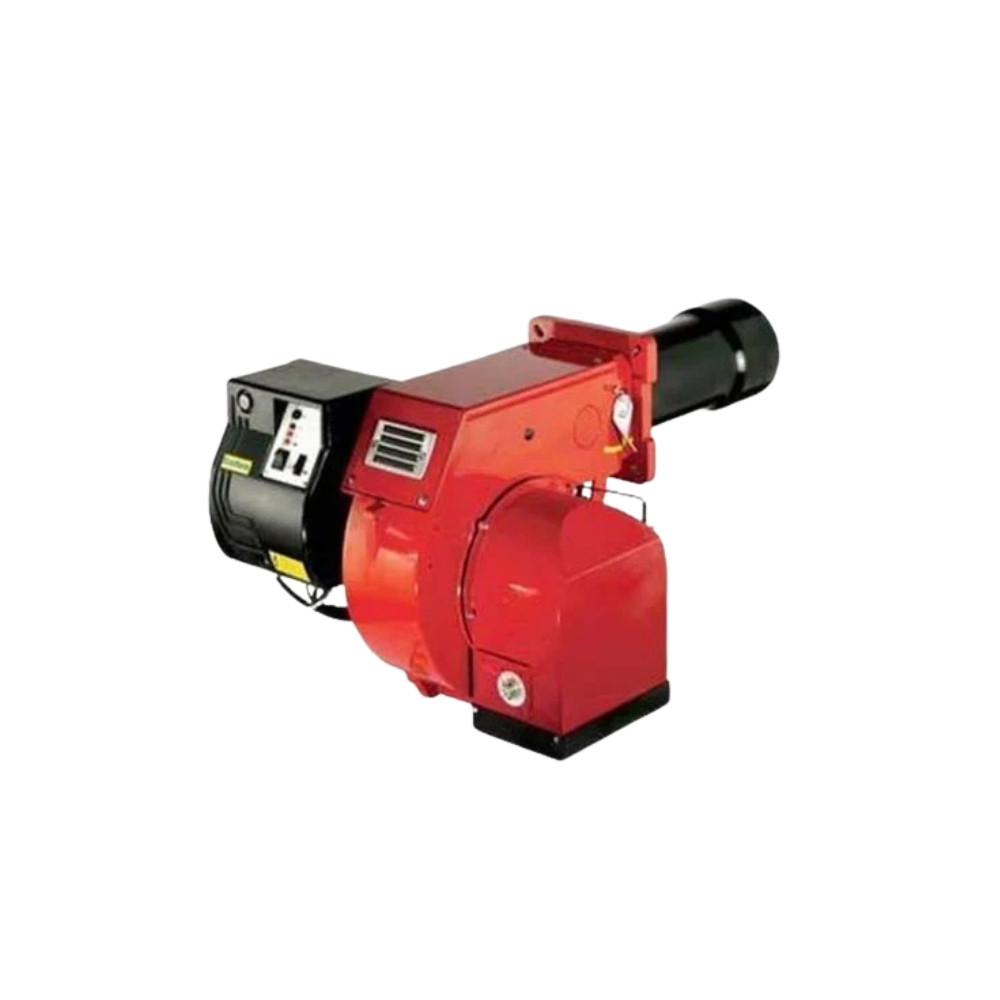
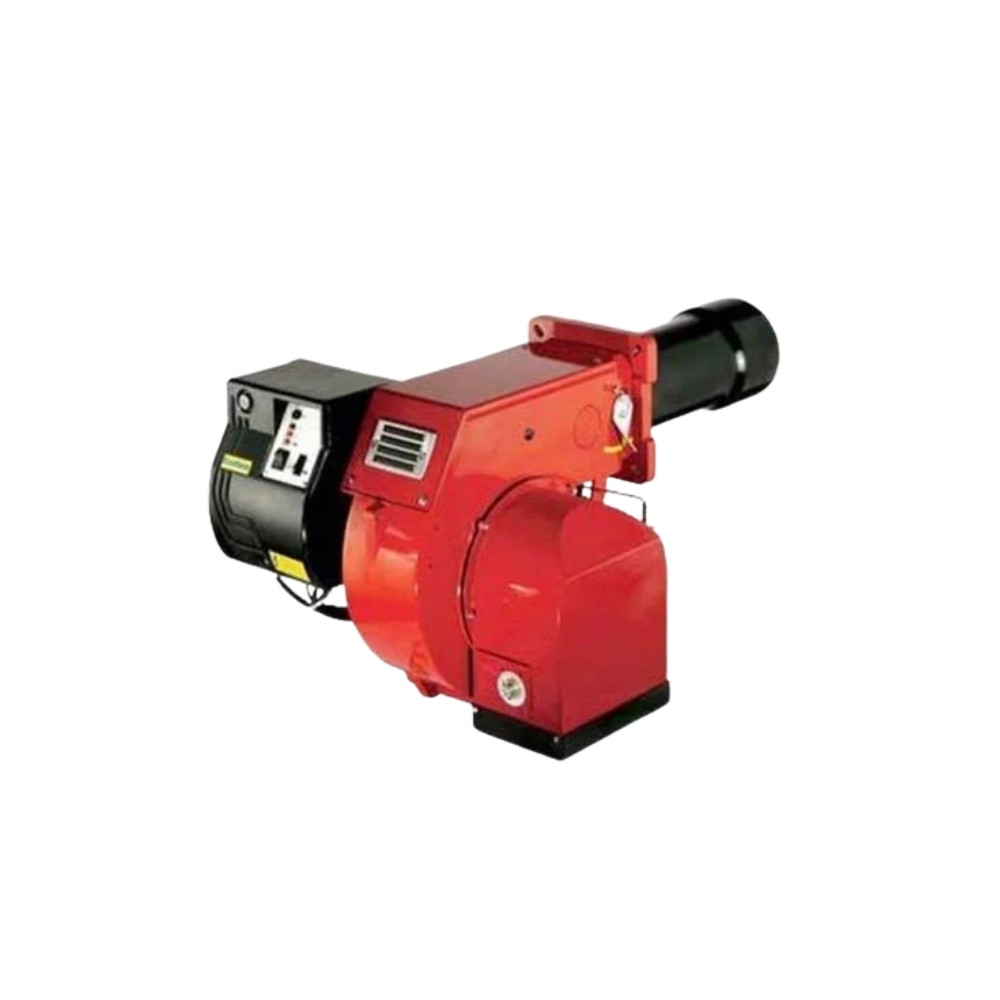
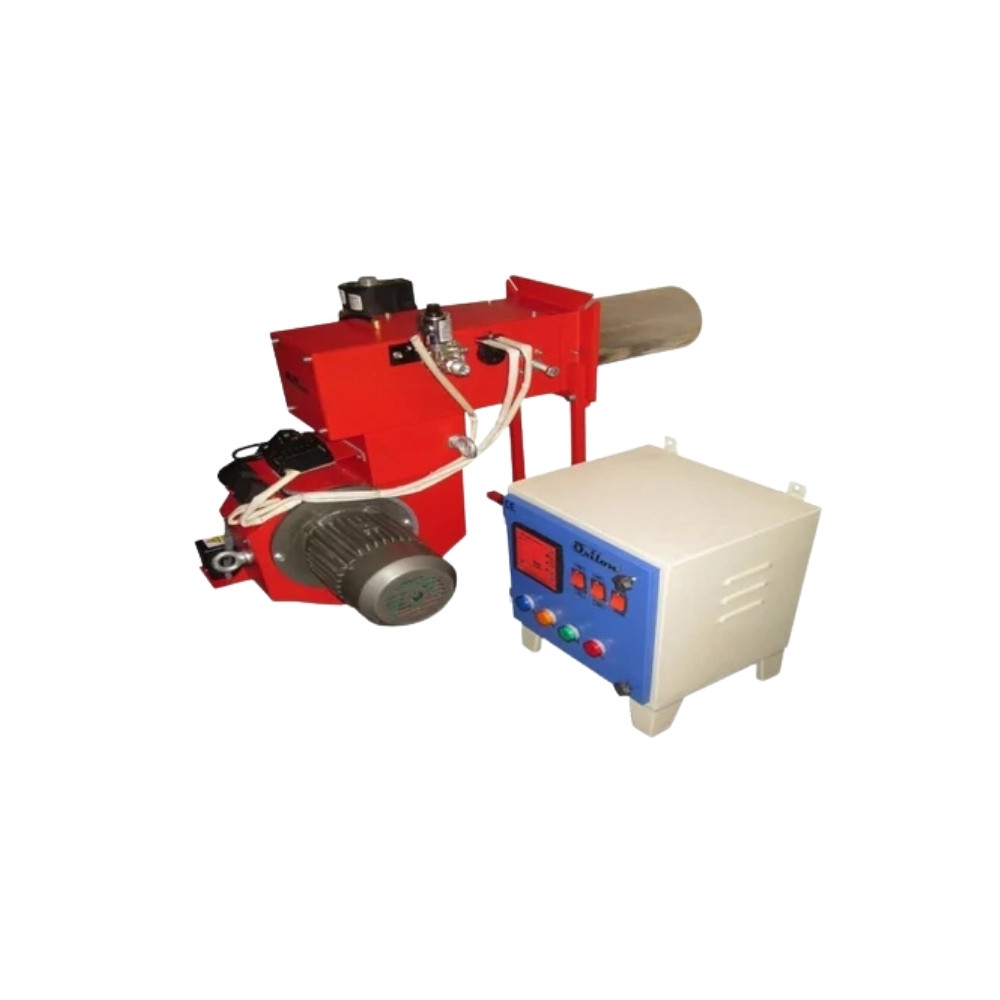
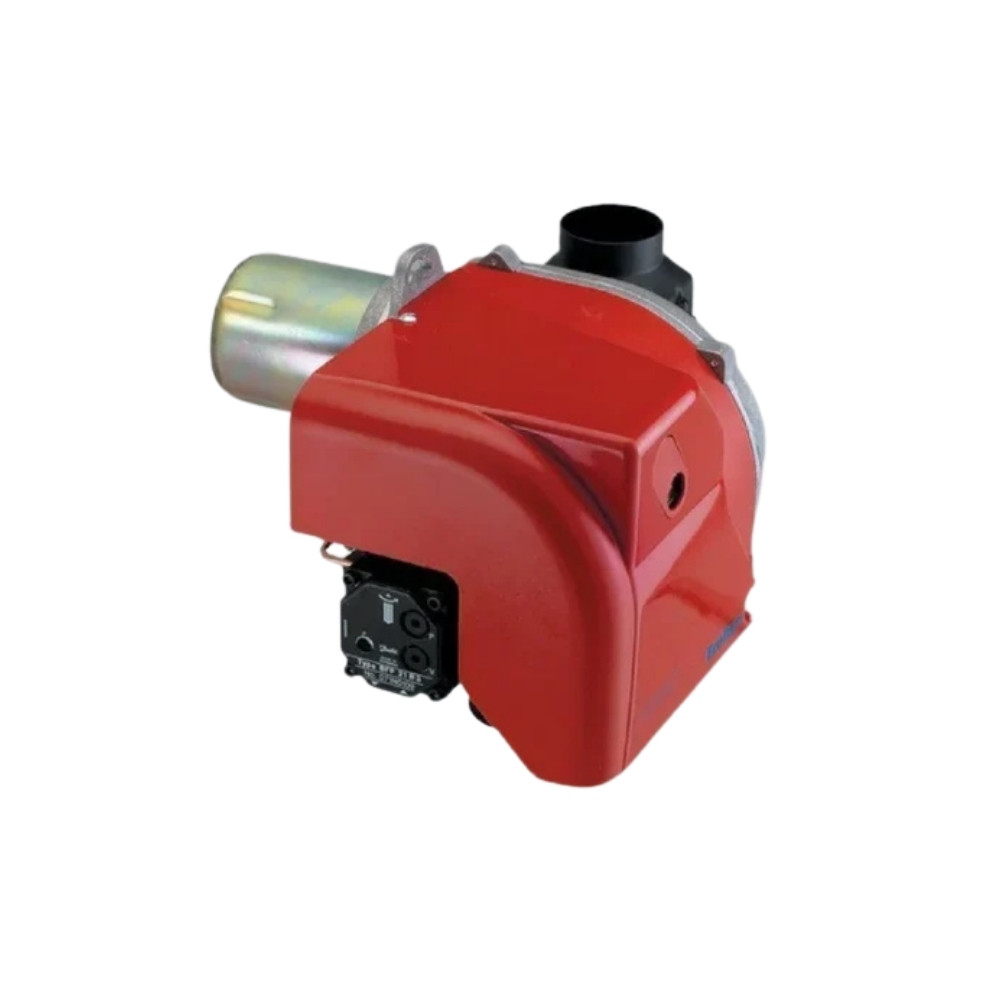
Heavy oil burners are designed for heavy industrial loads (like asphalt plants and large boilers) utilizing Furnace Oil (FO). Because heavy oil is highly viscous at room temperature, installing a fuel preheater to heat the oil up to 140°C is mandatory to ensure proper atomization and combustion.
Heavy fuel oils (like Furnace Oil or HFO) are widely used in heavy industries (such as steel mills, glass foundries, and asphalt mixing plants) because they provide high calorific values at a lower fuel cost than light diesel or gas. However, heavy oil is highly viscous and behaves like a semi-solid at room temperature. Firing it requires specialized burners equipped with inline heaters to thin the oil, enabling high-pressure atomization. This guide covers the engineering basics of heavy oil burners and the critical role of fuel preheating.
The Critical Role of Fuel Preheating Heavy oil cannot be atomized unless its temperature is raised to lower its viscosity. The fuel must flow through an electric or steam-heated preheater before it reaches the burner nozzle: - Operating Temperature: Heavy fuel oil must be heated to between 110°C and 140°C. - What happens if the oil is cold: If the fuel temperature is too low, the oil is too thick. This leads to poor nozzle spray patterns, starting lockouts, smoky exhaust, and fuel unburned deposits. - Avoid overheating: Heating the oil above 150°C can cause fuel cracking and carbonization, which clogs the nozzle assembly and preheater elements.
Why Two-Stage Firing is Mandatory for Heavy Oil Heavy oil burners generally employ two-stage (high/low) or fully modulating firing. Starting a large industrial burner at 100% capacity from a cold state can cause severe thermal shock to the furnace refractories and boiler shell. - Low Fire (Stage 1): The burner starts at a lower capacity (e.g., 40%) to establish a stable flame and warm the combustion chamber. - High Fire (Stage 2): The controller opens the air damper and fuel solenoid valves to ramp up to 100% capacity once the combustion chamber is hot.
Technical Specifications of Heavy Oil Burners Heavy oil burners are heavy-duty machines. A unit in the 6000 Nm3/hr capacity class typically features a powerful 3.5 kW blower motor to overcome the resistance of the combustion chamber. The blast tube is constructed of high-grade heat-resistant alloy steel. The burner head includes a specialized nozzle assembly with a return-flow line, allowing hot oil to circulate back to the preheater during pre-purge phases so that the oil at the nozzle is hot when ignition starts.
Maintenance Checklist for Heavy Oil Burners Because heavy oil contains impurities and sulfur, maintenance is more demanding than for gas or diesel burners: 1. Clean the preheater: Periodic cleaning of the preheater elements is necessary to remove carbonized oil deposits that reduce heat transfer. 2. Check the return valves: Ensure that the pressure control and return-flow valves are working smoothly to prevent oil pressure spikes. 3. Daily nozzle inspection: Wipe the nozzle face daily and check for wear on the orifice to maintain clean combustion.
Burner Spare Part Comparison Table
| Parameter | Heavy Oil Burners (FO) | Light Oil Burners (LDO/Diesel) |
|---|---|---|
| Fuel Viscosity | Very High (Needs preheating up to 140°C) | Low (No preheating required) |
| Atomization Method | High-pressure preheated nozzle flow | High-pressure gear pump flow |
| Preheater Element | Yes (Electric or steam preheater) | No |
| Boiler Tube Maintenance | Weekly (Higher soot and ash) | Monthly (Low soot) |
Our asphalt mixing plant in Mehsana operates under demanding conditions. Sourcing our heavy oil burners from Gajanand Engineering has improved our burner uptime, and their advice on preheater settings has stopped nozzle clogging.— Harish Patel, Plant Operations Manager, Mehsana Roadways, Mehsana
Frequently Asked Questions
What temperature should heavy fuel oil be preheated to?
Heavy fuel oil (Furnace Oil) must be preheated to between 110°C and 140°C to lower its viscosity for proper atomization.
Where can I source a heavy oil burner in India?
You can purchase high-quality industries heavy oil burners and heavy-duty preheating spares from Gajanand Engineering & Services in Ahmedabad.
Why is the fuel returning to the preheater on my heavy oil burner?
Returning hot oil to the preheater prevents the oil in the burner head from cooling down and solidifying during purge cycles, ensuring a clean ignition start on your industries heavy oil burners.
Need a Genuine Burner Controller?
Get the best B2B wholesale prices from Gajanand Engineering And Services — trusted by Indian utility plants since 2012. Genuine OEM parts, direct GST tax invoicing, and pan-India express road transport.
Sukhdev founded Gajanand Engineering And Services in 2012 and has over 12 years of hands-on technical expertise calibrating, servicing, and supplying industrial combustion systems and original boiler spares across Gujarat and India.
Request Quotation & Callback
Request commercial wholesale rates or technical guidance for the **Heavy Oil (FO/HFO) Burners for Industry: Two-Stage Firing & Fuel Preheating Basics**.